
Criminal Court Cases in Berkeley County
Berkeley County divides criminal work by court level. Berkeley Magistrate Court tries misdemeanors and creates complaints, initial-appearance records, bond entries, and preliminary-hearing records for felony allegations. If a felony continues, the matter can move through a grand jury and into the Twenty-Third Judicial Circuit. The Berkeley County Circuit Clerk then keeps the indictment or information, motions, hearings, plea or trial record, judgment, sentence, restitution entries, and later filings. Martinsburg Municipal Court separately handles city-ordinance and other authorized municipal matters.
The official West Virginia Judiciary Berkeley County roster identifies the local courts and clerk contacts. That roster helps a reader match a case level to the right office before asking for copies.
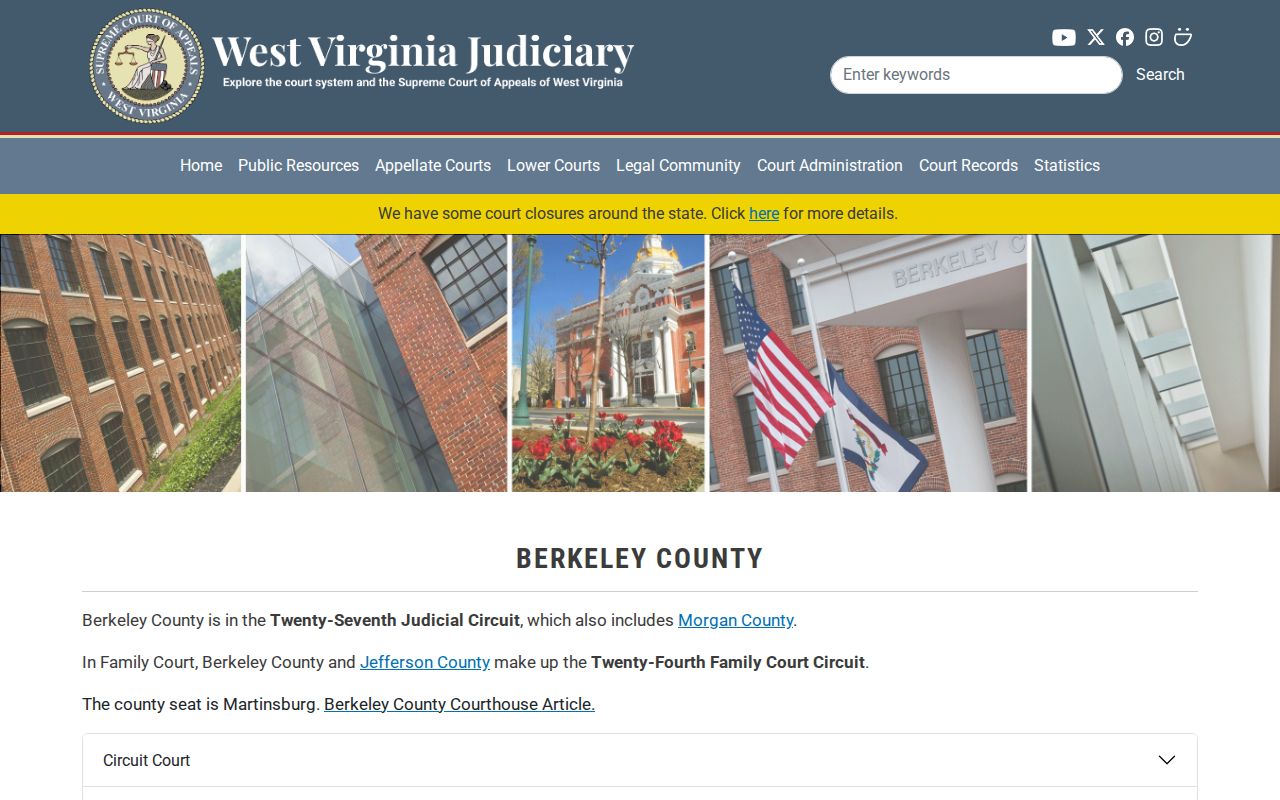
The contact page confirms that Magistrate and Circuit records share a county justice system but remain distinct case files.
Berkeley Criminal Courts Compared
A court name tells you what slice of a Berkeley County criminal case you are reading. A Magistrate felony code marks the complaint and preliminary stage; it does not mean a magistrate conducted a felony trial. A Circuit file supplies the later felony result. A municipal file can resolve an ordinance charge without ever becoming a Circuit case. This division is why a search that stops at the first result can miss the final outcome.
| Court | Criminal role | Access route |
|---|---|---|
| Berkeley Magistrate Court | Misdemeanors, felony complaints, bond, preliminary hearings | Magistrate Case Record Search or clerk at 304-264-1957 |
| Berkeley Circuit Court | Felony trials, appeals, expungement, restitution | Circuit Clerk at 380 W. South Street or 304-264-1918 |
| Martinsburg Municipal Court | City ordinance and authorized municipal matters | Current city court contact |
The Berkeley County department phone and fax directory is a second official path for checking office contact details.
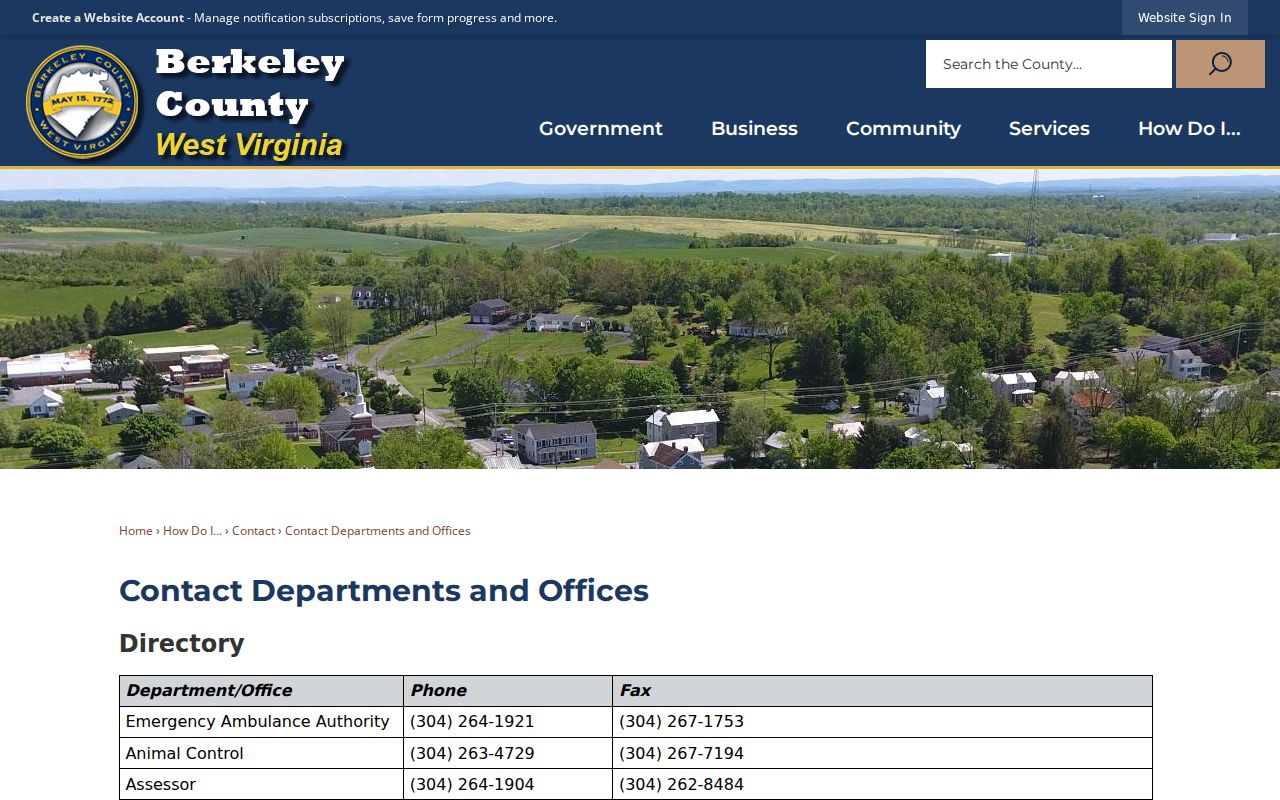
The directory is most useful when an older Berkeley court file requires a direct call rather than an online search.
Berkeley County Case Record Searches
The official Magistrate Case Record Search is the practical first stop for Berkeley County misdemeanor cases and the opening stage of felonies. Search by a known case number when possible. Name searches need care because spelling and common names can produce several candidates. Open the detail page instead of relying on a result row, then read charge, plea, disposition, bond, event, party, and docket fields as separate facts.
- Select Berkeley in the County field and enter the case number or the best available name fields.
- Compare the filing date, case location, agency, and case type before treating a result as a match.
- Read each charge and its own plea and disposition; counts in one Berkeley County case can end differently.
- Check docket events for transfer or probable-cause activity, then contact the Circuit Clerk for a later felony file.
- Request a certified judgment from the actual clerk when an official document, rather than a screen result, is needed.
| Search field | Use | Format note |
|---|---|---|
| County | Required county filter | Choose Berkeley |
| Case Number | Best direct match | Records may resemble 24-M02F-00753 |
| Last Name | Party-name search | Common names need more checks |
| First Name | Narrows party results | Spelling matters |
| Case Type | Optional category filter | Includes felony and misdemeanor types |
Follow Berkeley Felonies to Circuit
A probable-cause finding on a Berkeley Magistrate page is only a threshold ruling. It is not a conviction. When the record points to transfer, indictment, or Circuit activity, contact the Circuit Clerk. Provide the full name, the Magistrate case number, an approximate year, and any Circuit number shown on later papers. The clerk can explain inspection and copy options for material that is older, not digitized, or outside the Magistrate portal.
The Berkeley County Circuit Clerk page lists criminal actions, felonies, misdemeanors, forfeiture, restitution, juvenile matters, expungements, and Magistrate appeals among that office's duties.
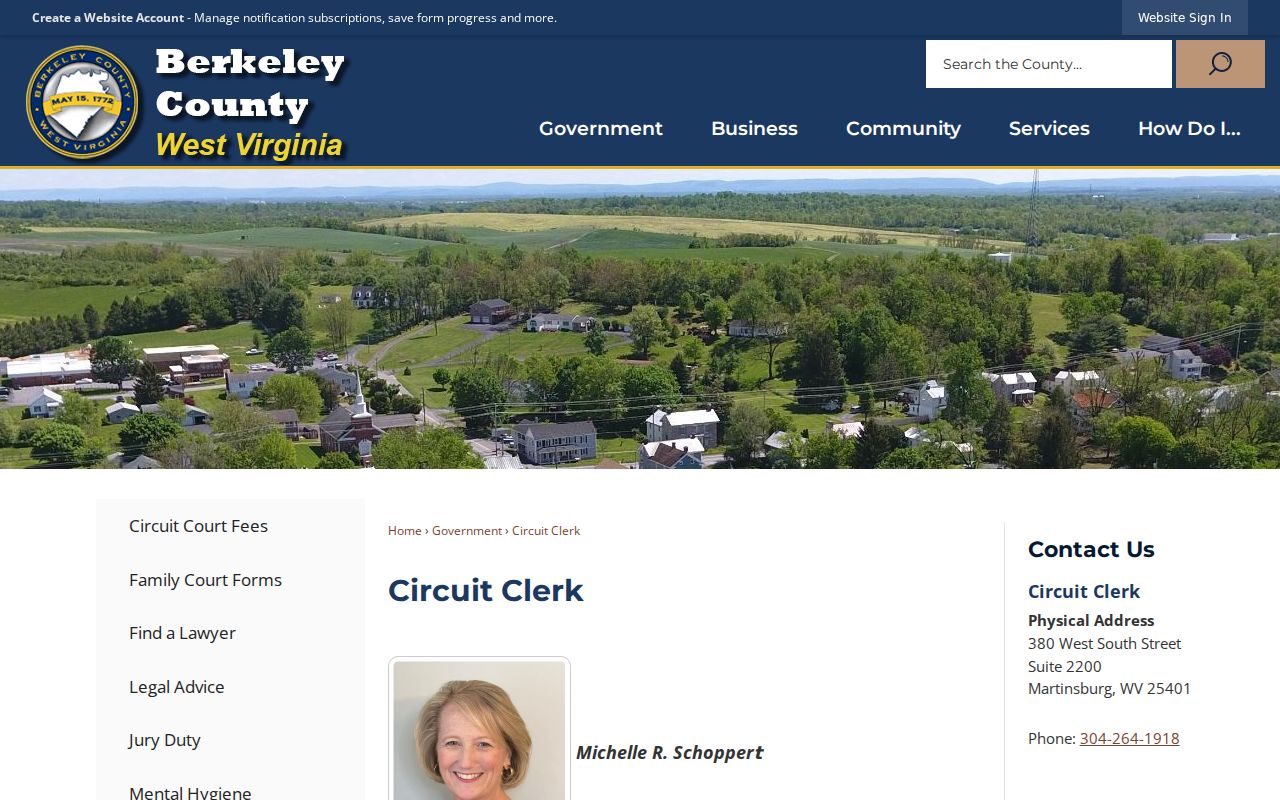
That scope explains why the Circuit Clerk, rather than the County Clerk, is the correct custodian for a later Berkeley felony case.
Note: A transferred bond may follow the case into Circuit Court, but it does not state whether the charge ended in conviction.
What a Criminal Case File Contains
A Berkeley County criminal case detail is a set of linked fields, not one verdict line. Basic information identifies the location, description, filing date, trial type, appearance date, and originating agency. Charge rows then separate the alleged offense from plea and disposition. Bond, event, party, judgment, sentence, and docket blocks answer different questions. A public detail may expose a full birth date, so use that fact only to confirm a match and do not republish it.
| Case identity | Case ID, location, type, filing date, description, and agency |
|---|---|
| Charges | Count, statute, charge text, plea, disposition, date, and judicial officer |
| Bond | Type, amount set, reductions, posted amount, status, and dates |
| Events | Hearing type, date, time, room, location, judge, and closure reason |
| Parties | Roles such as defendant, officer, prosecutor, counsel, magistrate, and surety |
| Docket | Chronological filing date, code, description, and filing party |
| Outcome | Non-monetary sentence, judgment, disposition, and related case information |
Reading Berkeley Docket Details
Several Berkeley court fields are easy to misread. Case Location identifies the court, not necessarily the scene of the event. Filing Date may differ from the arrest date. The Agency field is often the best clue to which sheriff, police department, or state unit holds the incident report. A felony type on the Magistrate system describes preliminary jurisdiction, not a felony judgment from that court.
Bond also has a lifecycle. Set amount, reduced amount, posted total, bond type, status, and dates do not mean the same thing. A property or surety bond does not prove that cash equal to its face amount was deposited. Likewise, “Hearing/Event Closed” commonly means one scheduled event ended, not that the whole Berkeley County case is closed. Terse docket codes should be read with their descriptions rather than expanded by guesswork.
- Probable cause
- The preliminary threshold that allows a felony matter to continue, not proof beyond a reasonable doubt.
- Disposition
- The outcome entered for a charge, such as dismissal, plea result, acquittal, or conviction.
- Nolle prosequi
- A prosecutor's formal decision not to continue a charge.
- Capias
- Court process directing custody, often tied to a failure to appear or comply.
Criminal Case Stages in Berkeley County
A Berkeley County criminal court case develops in stages, and each step can create a new entry or a new file. The complaint starts the judicial trail. The initial appearance addresses the allegation and release terms. A felony then receives preliminary review before grand-jury action and Circuit arraignment. Motions, discovery, and negotiations lead toward a plea or trial. Judgment and sentence follow only after a qualifying disposition.
Case flow: Charges Filed → Arraignment → Pretrial → Plea or Trial → Disposition → Sentencing.
That short line compresses two court levels. In Berkeley County, early felony events normally appear in Magistrate Court, while indictment, Circuit arraignment, trial-level motions, judgment, and sentencing belong in Circuit Court. A post-judgment motion or appeal can add later entries. Municipal ordinance cases follow their own city path and do not replace either county search.
Older Berkeley Cases Missing Online
A blank portal result does not prove that no Berkeley County criminal case exists. The name may be misspelled, the file may predate online coverage, the matter may sit at a different court level, or public access may have changed after an expungement order. Begin with the approximate filing year and likely court. Then give the clerk a case number if one appears on bond papers, notices, or a prior docket.
For a Circuit file, ask about counter inspection, copies, certification, and mail handling. For a Magistrate file, call 304-264-1957 and explain the search already attempted. The official county court directory should be used for current contact details. Do not send a broad request for every record held about a person when a named Berkeley case or date range can identify the file much more precisely.
Access Rules for Case Records
West Virginia court access and agency record access overlap, but they are not identical. A public Berkeley docket can be viewed even though the West Virginia State Police Criminal Identification Bureau does not offer an unrestricted public name-search product. CIB material links fingerprint-supported arrest cycles and reported outcomes. Under state law, disclosure to a private recipient requires the record subject's signed, acknowledged authorization. A court file, by contrast, explains pleadings and what happened in one prosecution.
The official text of W.Va. Code §15-2-24 sets the CIB authority and dissemination limits.
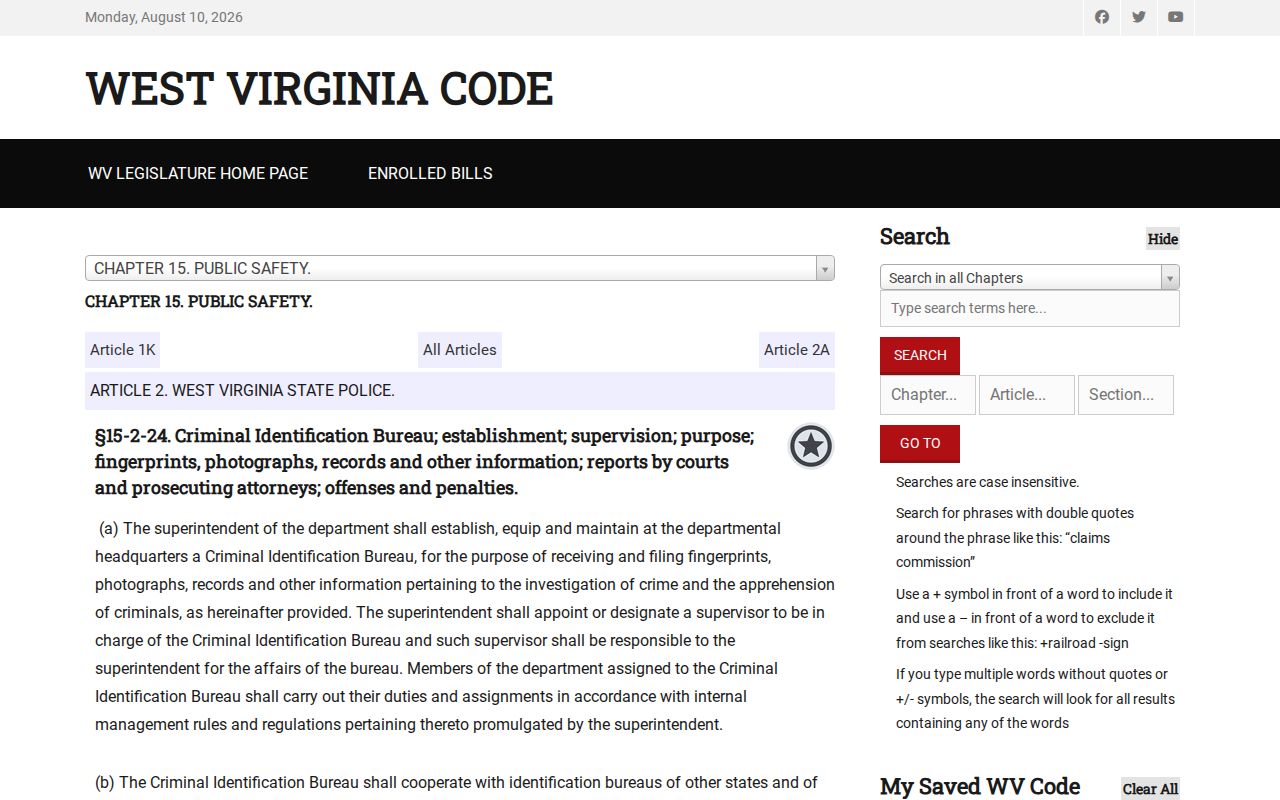
The statute image reinforces why a public Berkeley County docket search and an official fingerprint record review are separate tasks.
Berkeley Court Requests and FOIA
A focused request works best when online access falls short. Name the Berkeley office, case number, date range, record sought, preferred format, and contact method. Ask the clerk about certified copies when proof of the judgment is the goal. Ask the arresting agency, not the clerk, for an officer's report. West Virginia FOIA gives any person a right to request reasonably specific, nonexempt public records, but it does not override rules for juveniles, protected victim information, active investigations, or sealed and expunged files.
The Legislature publishes the inspection and copying right in W.Va. Code §29B-1-3.
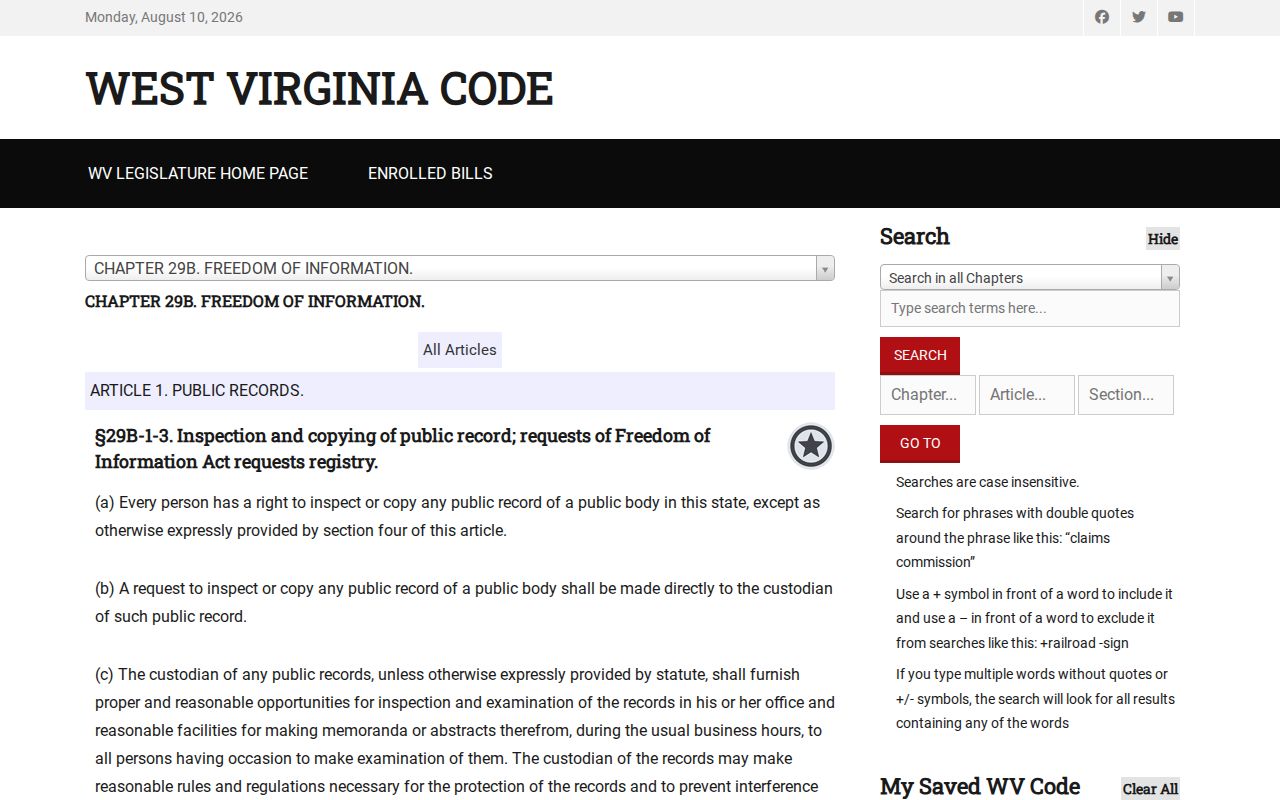
The law supports a precise Berkeley County request while leaving other statutes and valid court restrictions in place.